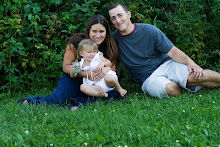

on the verge
I feel like I might be on the verge of a breakdown. I thought that the reply I would get from the genetic counselor would help me. After reading, I just feel more confused. And I talked with my regular OB this morning and I think she really wants me to get the amnio. I HATE THIS. I don't want this to be happening to us. I don't want to have to even think about getting an amnio. I don't want to make this decision. I waited a long time to be pregnant and I just want everything to not be like this. I want to wake up and have it be a dream. I keep telling myself I should be happy that at least my baby is alive. And I am. But that doesn't keep me from being sad.
My original email is in black, her answers in blue.
Kate,
Hi, this is Krystal Muellenberg. My husband Matt and I met with you about three weeks ago because our ultrasound had shown an abnormal nuchal thickness. I am not sure if you knew the results of the ultrasound we had when we met with you, but it showed that the thickness was 5 mm and the doctor said this gave the baby a 1 in 3 chance of have a genetic abnormality. We scheduled an amnio for July 20th. Since we have left though, we have started to question that decision. I was hoping I could ask you a few questions, which would make it easier for us to decide if we should go ahead with the amnio or not. We are questioning the amnio mainly because of the miscarriage risk. I know the risk is very small, but the thought of putting our baby at any risk is very scary for us. So, here are my questions. Thank in advance for taking the time to read them all.
1. I was wondering what the miscarriage risk is for amnios for Meriter specifically? Can you get those? Or the risk of miscarriage for the doctor doing our amnio. I know in meeting with you we had discussed a 1 in 200 risk, but on the Meriter website I also saw something that said there was a 1 in 500 risk. Also, would we be able to find out how many amnios our doctor preforms each year? We don't have records specifically for the risk for miscarriage with each of the Meriter physicians, which is why we use the 1 in 200 national risk. It is sometimes very difficult to determine if a woman miscarried as a result of the procedure or due other factors. A 3-5% background risk for miscarriage exists in the second trimester. The perinatologists here all tend to do more amnios than regular obstetricians. In general, I'd say that they each do 3-5 per week. We are currently updating the Meriter website. I think the 1 in 200 risk for miscarriage is more accurate than 1 in 500.
2. How did the doctor come to odds of 1 in 3? I have done a lot of reading that would suggest my odds (taking into factor both my age and the nuchal thickness) would be closer to 1 in 10. I wasn't sure if the doctor factored in my age at all, or if there were other factors that made my risk that high, other than just the nuchal measurement. In your case, the nuchal measurement was significantly increased (5 mm), and the fluid extended along the length of the spine. These two factors taken together were the reason that Dr. Jenkins said a 1 in 3 risk. This risk has nothing to do with your age, only the findings seen on ultrasound. No other findings were seen on the previous ultrasounds that suggest a chromosome abnormality; however, since the baby is still tiny it is very hard to determine if any other problems are present until later in the pregnancy
I am concerned that she said the fluid extended the length of the spine, because the first day we talked to her about this she said if it did extend the base of the spine their could be worse problems.
3. If we decided not to do the amnio, what other options do we have that could tell us more about our risks. I realize that anything other than the amnio will not give us actual results. But would it be worth it to have an AFP or Triple Screen and a targeted level 2 ultrasound for more information.
The quad screen would give you a risk estimate for Down syndrome, trisomy 18, and spina bifida (opening along the spine). It will give you a numerical risk, like 1 in 200, for Down syndrome. It may be helpful to have these risk estimates if you are really having a difficult time making a decision about the amnio; however, even if the risk for Down syndrome, trisomy 18, and spina bifida are low, the increased nuchal measurement still raises the risk for chromosomal abnormalities with the pregnancy. In other words, a normal result with the quad screen can't eliminate the risk because of the increased nuchal measurement. The targeted ultrasound will provide more information. As you may remember, the doctor will take a really detailed look at the baby's growth and structure. He or she will look for any "soft markers" for chromosome abnormalities. For example, some babies with Down syndrome have shortened upper arm bones. Shortened bones have no functional impact on the baby, but it confers an increased risk for Down syndrome. Also, he or she will look for any structural abnormalities with the baby, such as heart defects. Regardless of whether you decide to have an amnio or not, the ultrasound will provide more information about the growth and structure of your baby. As we discussed, we would also offer you a fetal echocardiogram to look at the baby's heart in more detail. If you are extremely concerned regarding the risk to the pregnancy, the ultrasound may give you further information to make your decision about amniocentesis. You could schedule an ultrasound, with the possibility of an amniocentesis afterward, so that you could consider the information from the ultrasound. Again, as we've discussed, unfortunately the only way to know for sure if the baby has a chromosome abnormality is to have the amniocentesis performed. Some couples I meet with absolutely want no risk to the pregnancy and therefore only do screening tests. Other couples have a strong need to know for certain if the baby does have a chromosome abnormality in order to prepare.
4. Could we be putting our baby at any risk by NOT having the amnio. As in, if the baby did have an abnormality and we didn't find out for sure by the amnio, could we be putting it at any risk, that could be lessened if we knew for sure. Or could we monitor the baby with a Level 2 ultrasound, and look more at the organs, etc. Again, the main reason to have a definitive diagnosis would be for you and the physicians to prepare. If a couple knows for sure that their baby has a chromosome abnormality, than they can learn about the disorder and inform family and friends. Also, the physicians can prepare for the birth of a baby who may need surgery, other treatment, etc. If a baby does have a chromosome abnormality, most likely it is not going to alter the course of prenatal treatment for the mom.
We just want to have all of the information we possibly can have before deciding whether or not to go ahead with the amnio. Thank you very much for your time!
Honestly.... I can't even believe this is OUR BABY we are talking about.
posted by Krystal Muellenberg @ 2:37 PM

0 Comments:
Post a Comment
<< Home